
Adopt AI without losing control.
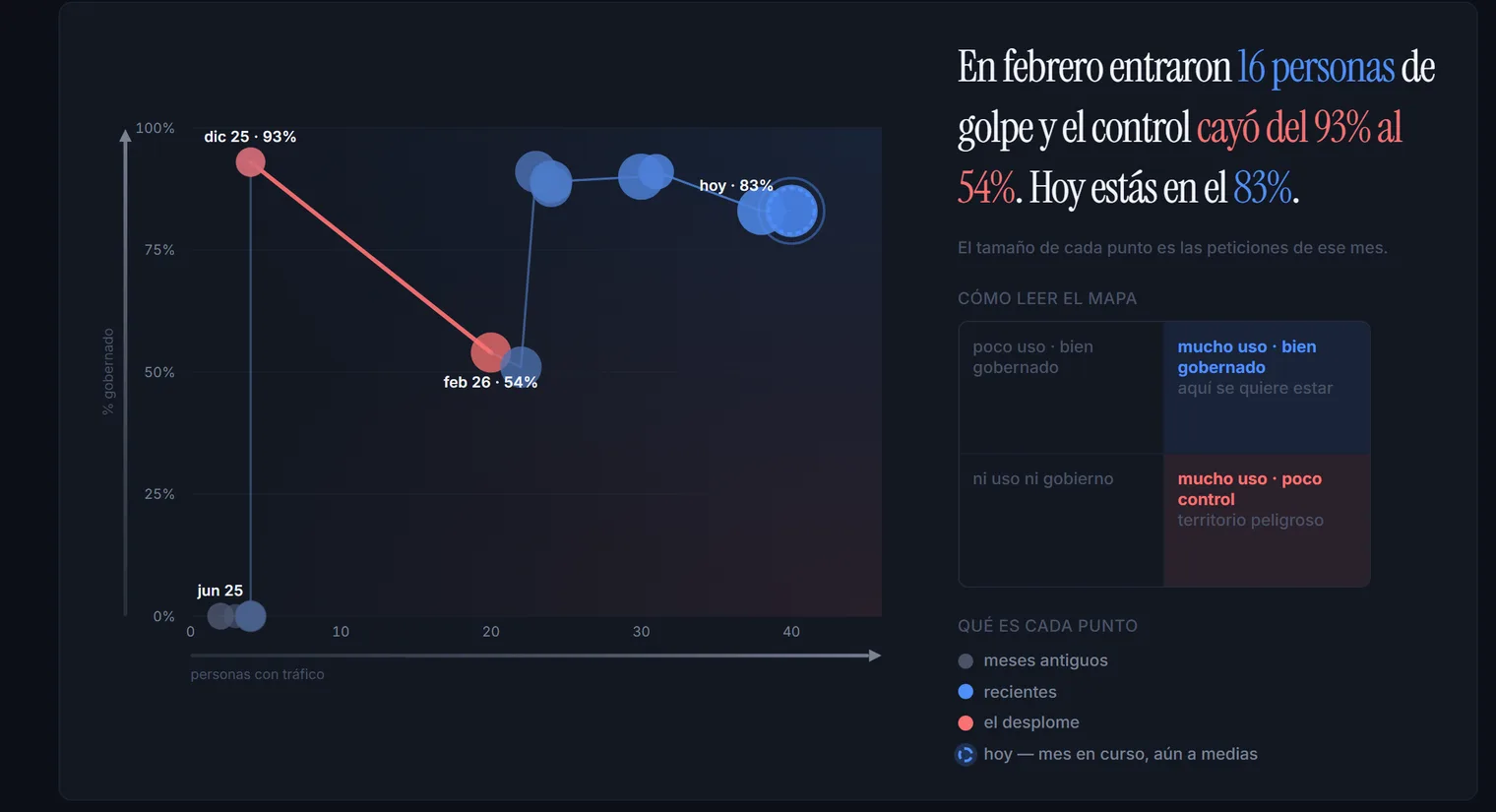
Two forces pulling in opposite directions — how much AI your people use, and how much of it is governed — and a way to not have to choose.
Start here
Discover what you did not know you had
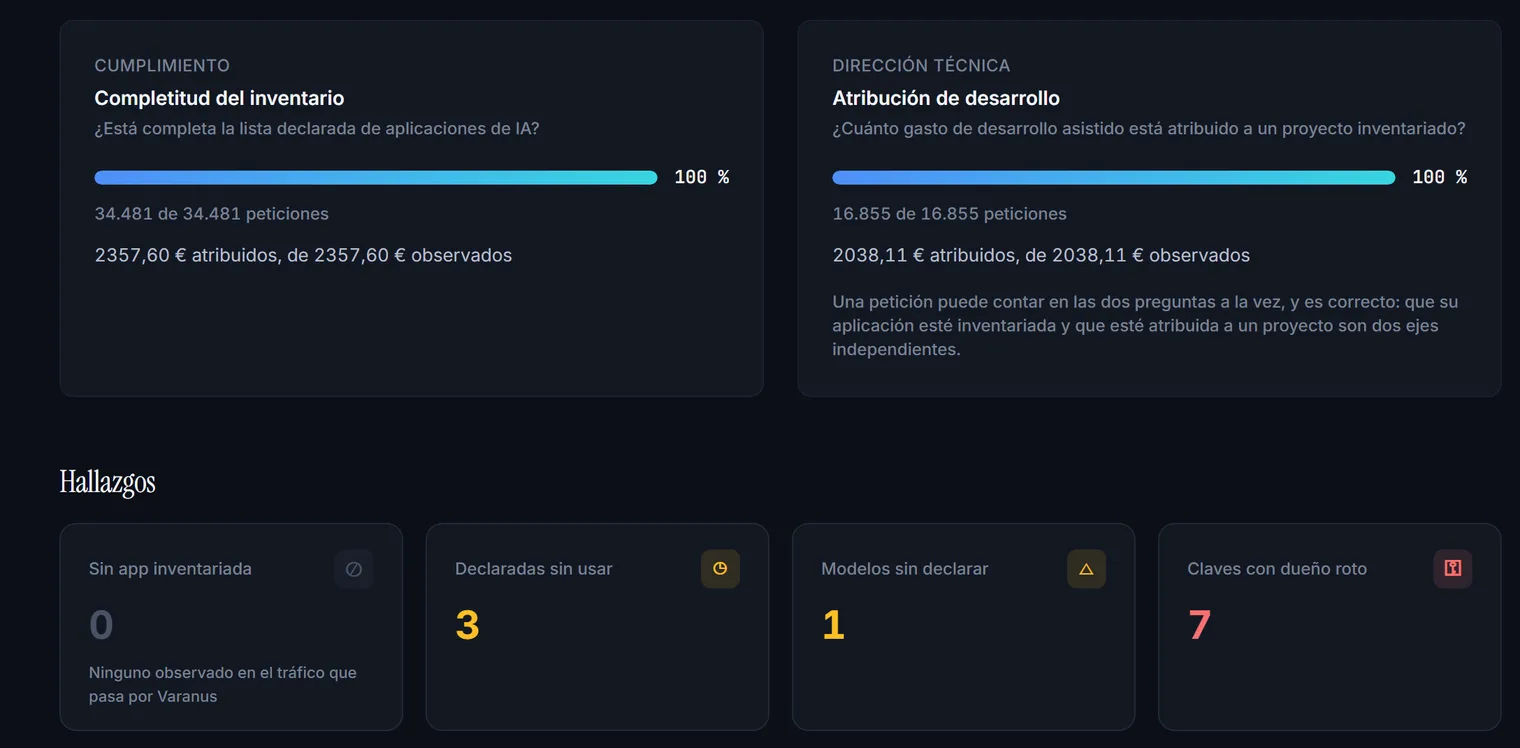
You declare your AI applications; the gateway sees the real traffic; the screen shows you the difference. It is the honest answer to "how do I know my inventory is complete?" — we do not ask you to trust your list, we check it against the channel.
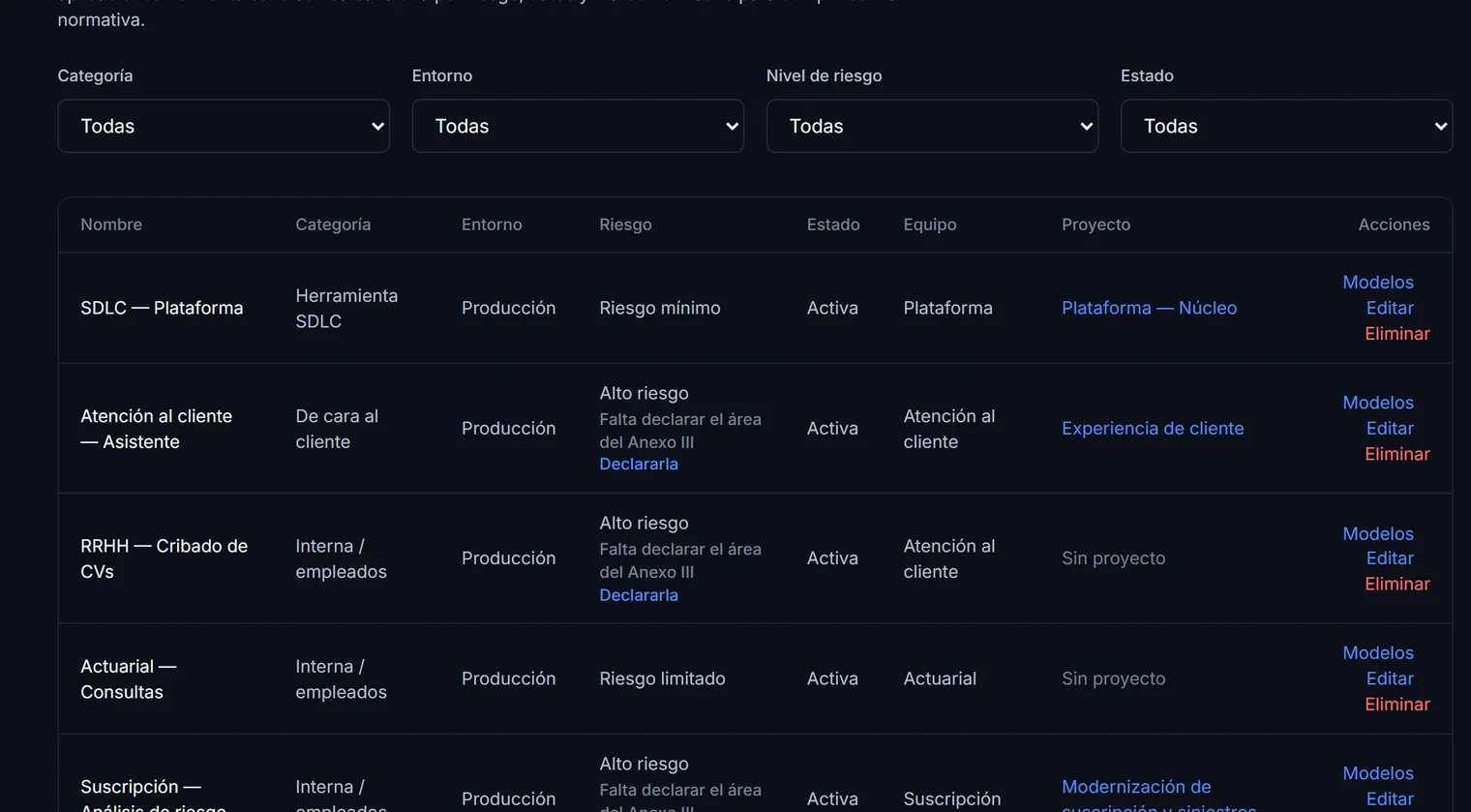
A content-generation application has 725 requests this month and nobody has decided its risk. It shows up as a loose end, with a button to classify it.
Visibility
Knows what is happening
Which applications, who uses them, on which model and how much they cost. Risk classification is a signed act with history, not a checkbox. Traces of every request. And spend split for real: by team, project, application, model and risk level.
The panel separates spend by risk level: most of it on minimal-risk applications, but €571 of the period on high-risk ones — what a CISO wants to see apart, not folded into a total.
The core
Set limits without slowing anyone down
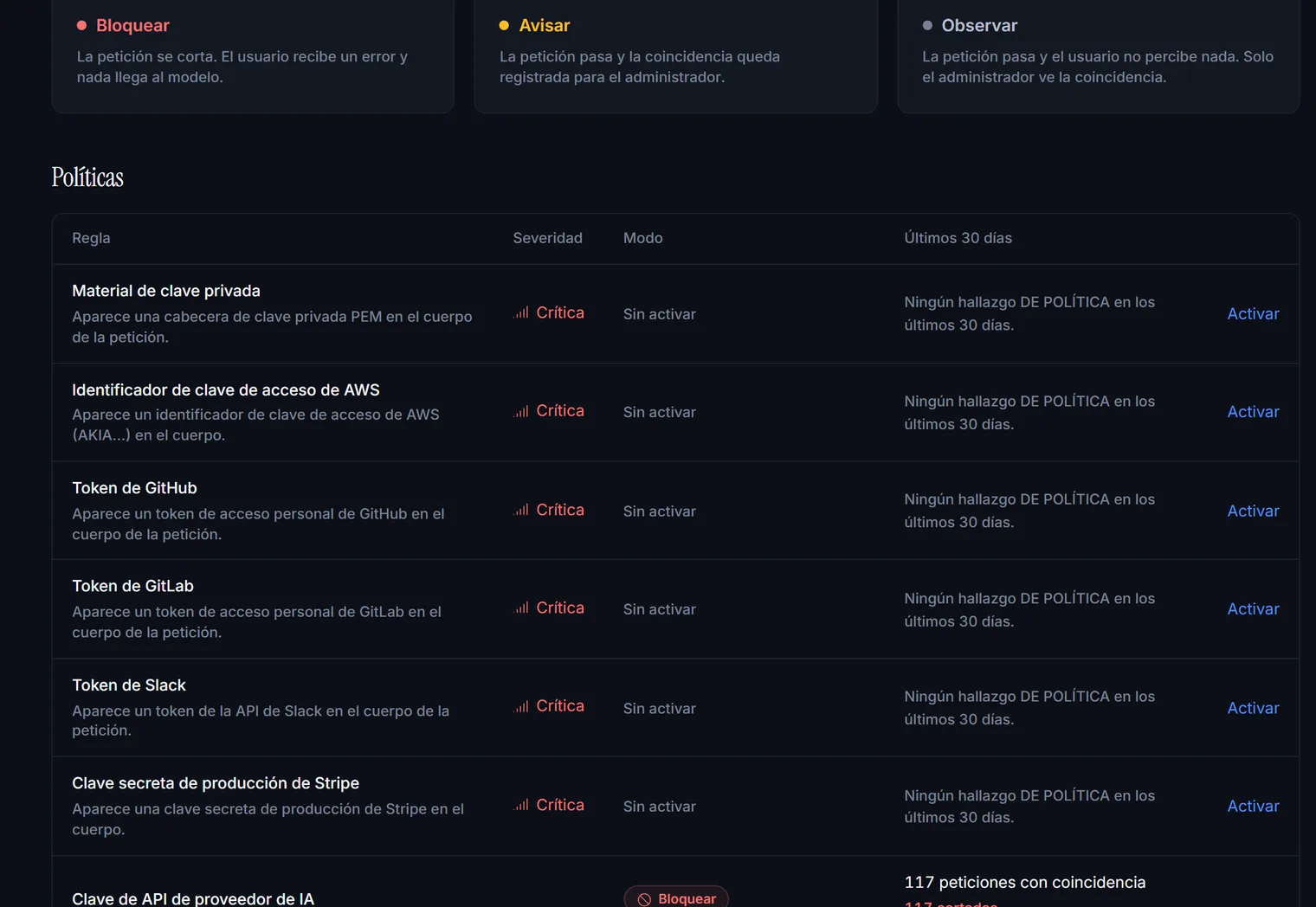
A catalogue of rules that inspect every request before it leaves: keys and credentials, financial data, personal data. For each one you choose what happens when it fires, at four levels: observe, warn, obfuscate or block. And you activate it for the whole organisation, or hardened per application where needed.
- Observe — records it and lets it pass.
- Warn — lets it pass and pushes it to your notices.
- Obfuscate — replaces the datum with a marker before it leaves.
- Block — cuts the request.
1,239 times someone included a provider key in a prompt; since the rule switched to block, they are cut before leaving — and the attempts dropped on their own, because people stopped pasting keys once they started being cut off.
When audited
You can prove it
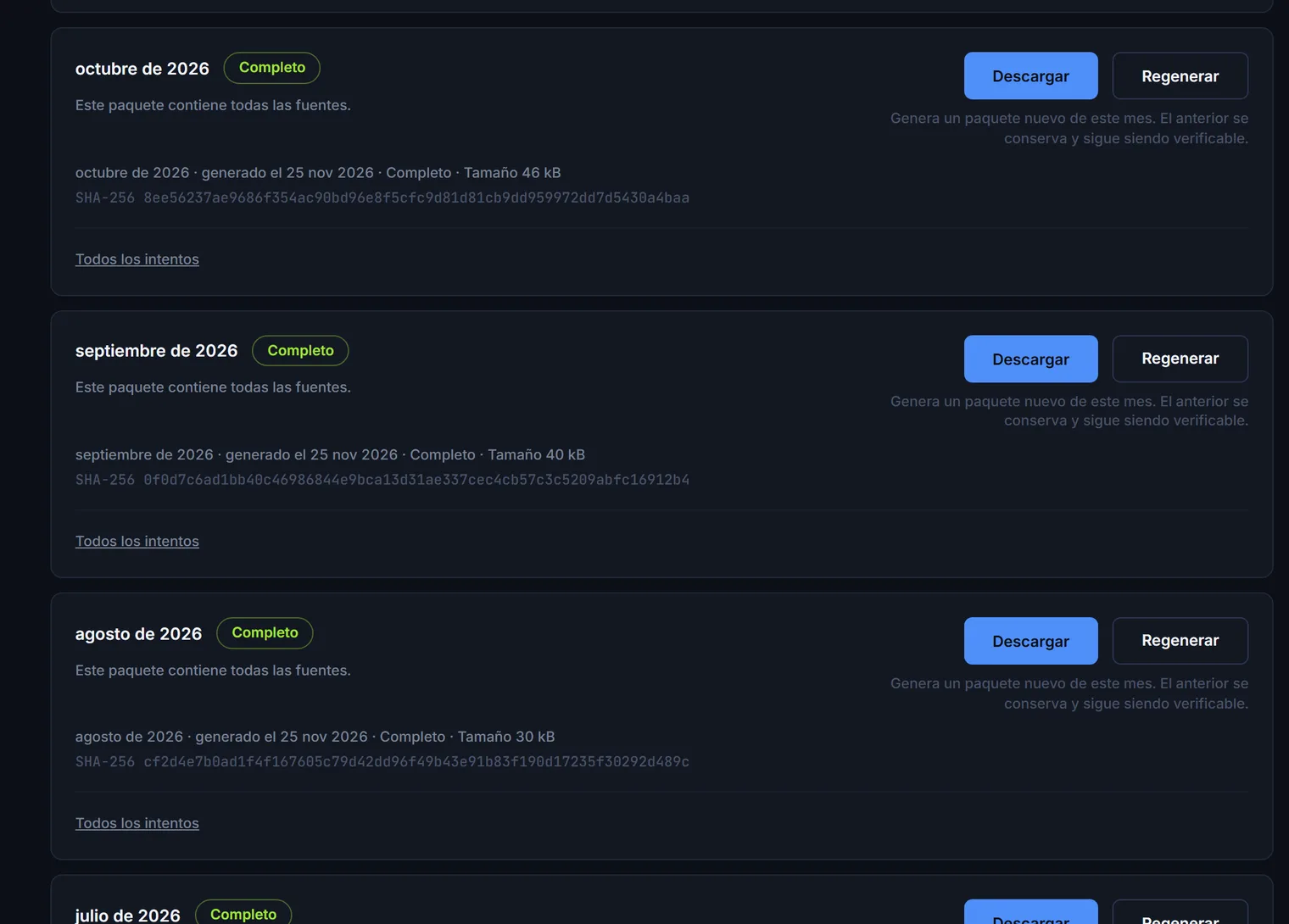
Obligations derived from how you classified each application, for the AI Act and GDPR. Signed, dated attestations. And monthly evidence packs, generated automatically and sealed with SHA-256: a ZIP that travels alone and that anyone can verify without entering the product.
You are asked for the evidence of a closed month. You download the sealed ZIP, with the frozen compliance report, the attestations and the audit extract inside.
Coming soon: DORA, ENS and ISO 27001 (today they can be declared, but they do not yet evaluate).
Cost
And spend, under control
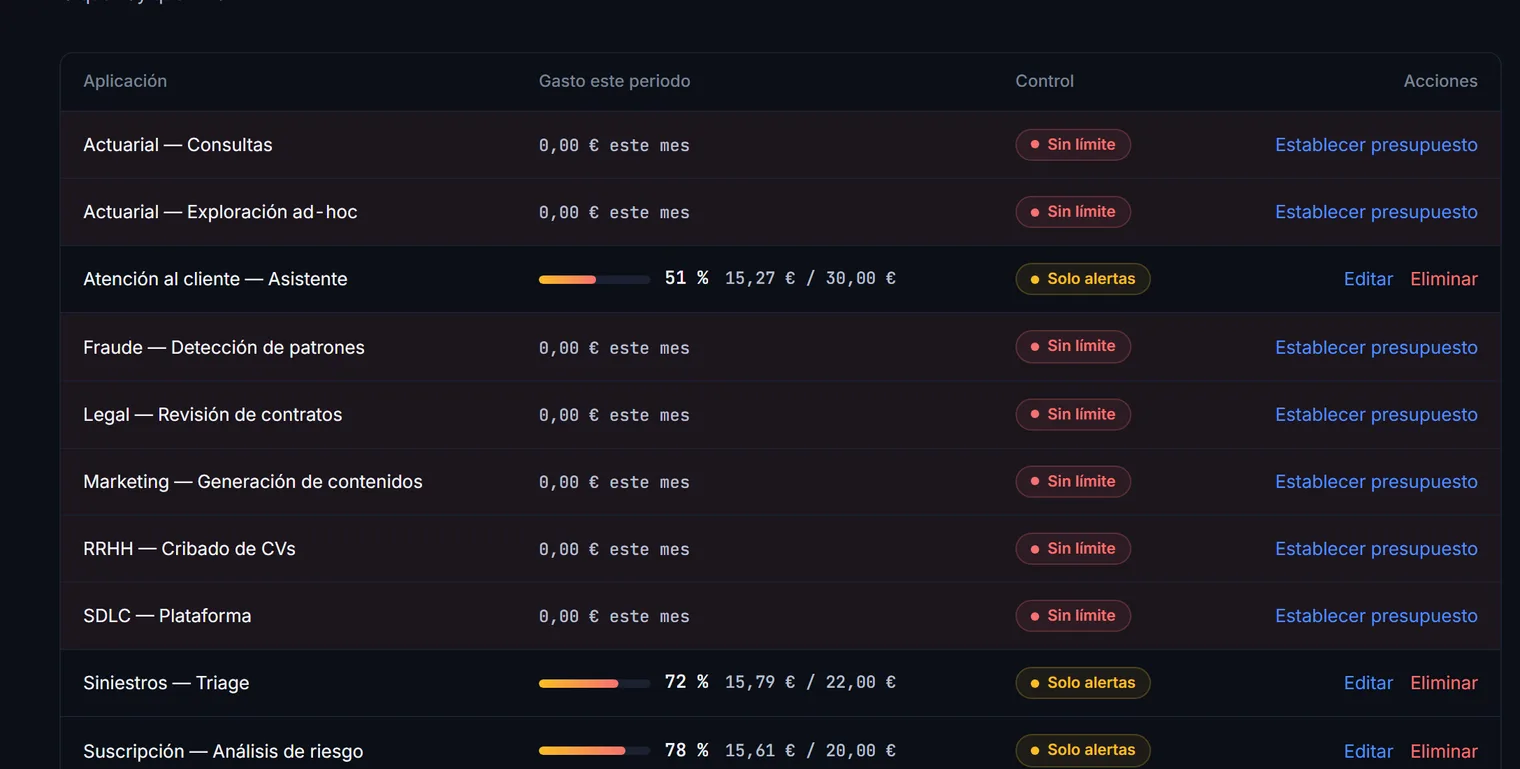
Per-application budgets with a real cut at the gateway: with a hard cap, at 100% it stops forwarding — the next request is rejected, no overspend is billed. The panel flags live which applications are near the cap, and every request is attributed to euros with the rate frozen.
An application has a €20/month cap. With a hard cap, at 100% the gateway cuts the next request instead of spending on.
And to govern it
What it takes, without ceremony
- Teams and projects — cost centres and initiatives that group applications.
- Virtual API keys — only the hash is stored, shown once, scoped to an app, team or person.
- Provider accounts and credentials — with rotation, and no provider key ever leaves the gateway.
- Members, roles and invitations — who can see and do what.
Adopt AI. Keep control.
Start by seeing all the AI in your organization. Govern what passes through Varanus.
Request a demo